Global Warming Feeds Fish?
Gabriella Jones
3/6/2026
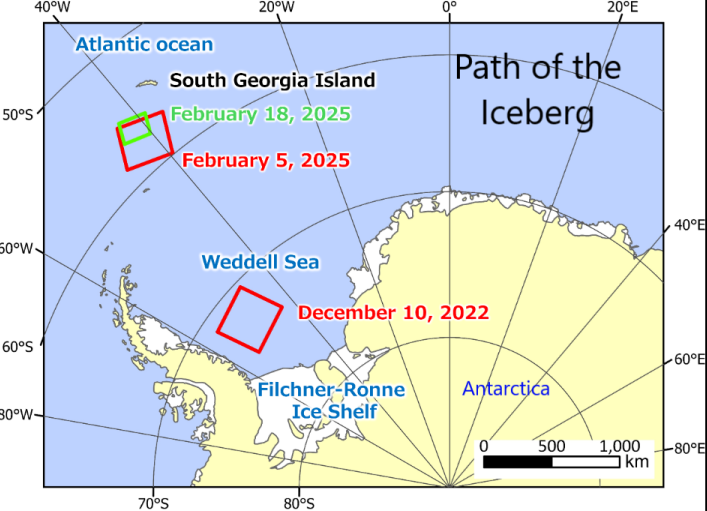
The giant Antarctic iceberg known as A-23A has recently drawn intense interest from scientists around the world. Originally breaking off from the Filchner-Ronne Ice Shelf in Antarctica in 1986, the iceberg remained grounded on the seafloor for decades before finally beginning to drift into the open Southern Ocean in the early 2020s. At its peak size it covered roughly 3,800 square kilometers (1467 sq. mi.), making it one of the largest icebergs ever recorded. As it has moved north into slightly warmer waters, the iceberg has begun to fracture and melt, creating a rare natural experiment for researchers studying ocean ecosystems and climate processes.
Scientists from organizations such as NASA, the British Antarctic Survey, and several international oceanographic institutes are carefully monitoring A-23A using satellites, research vessels, and ocean sensors. Satellite instruments are especially valuable because they allow researchers to measure ocean color, which reveals the concentration of chlorophyll in phytoplankton. These microscopic plant-like organisms form the base of the marine food web and play a central role in the Earth’s carbon cycle. When large blooms occur, phytoplankton absorb carbon dioxide through photosynthesis and help transfer carbon into deeper layers of the ocean.
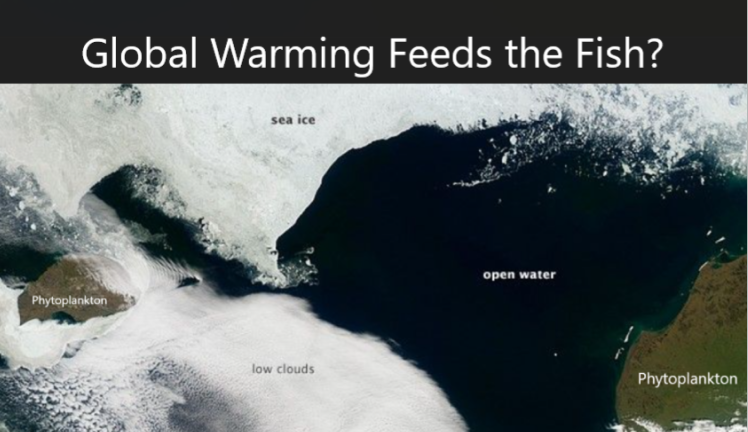
One of the most striking discoveries around A-23A has been a massive phytoplankton bloom triggered by nutrients released as the iceberg melts. Antarctic ice often contains dust and minerals such as iron that were trapped when the ice originally formed. When these nutrients enter the ocean, they can fertilize surrounding waters and stimulate rapid phytoplankton growth. Satellite imagery has shown green swirls in the water around the iceberg, indicating dense concentrations of these microscopic organisms.
The bloom does not only affect microorganisms. Phytoplankton serve as food for zooplankton and Antarctic krill, which in turn feed many fish species in the Southern Ocean. Fish that benefit indirectly from these blooms include species such as Antarctic silverfish and Antarctic toothfish, as well as other small fish that rely on plankton-rich waters. These fish support larger predators including seals, penguins, and whales, meaning the bloom can temporarily boost productivity across an entire marine ecosystem.
Some researchers have suggested that events like this might modestly increase fish abundance in certain regions. In theory, increased phytoplankton growth could support larger populations of plankton-eating organisms and eventually more fish. This raises interesting questions about whether natural ocean fertilization from melting ice could partially offset some pressures caused by global overfishing. However, scientists are cautious about drawing that conclusion. The productivity boost from a single iceberg is temporary and localized, and it cannot solve the systemic problem of excessive fishing pressure in many parts of the world.
There are also potential negative consequences associated with large drifting icebergs. If an iceberg grounds near islands such as South Georgia, it can disrupt feeding routes for penguins and seals that must travel long distances to find food for their young. Large icebergs can also scrape along the seafloor, damaging delicate benthic ecosystems that may have taken centuries to develop. In addition, while phytoplankton blooms can remove carbon dioxide from the atmosphere, the long-term climate impact of these events is still uncertain.
For scientists, A-23A represents a valuable opportunity to observe how melting Antarctic ice interacts with ocean circulation and marine ecosystems. The iceberg acts almost like a moving fertilizer source drifting through the Southern Ocean. By studying it, researchers hope to better understand the complex connections between climate change, nutrient cycles, and ocean life.

Gabriella Jones