Android’s Latest Rival
Independent OS
2/20/2026
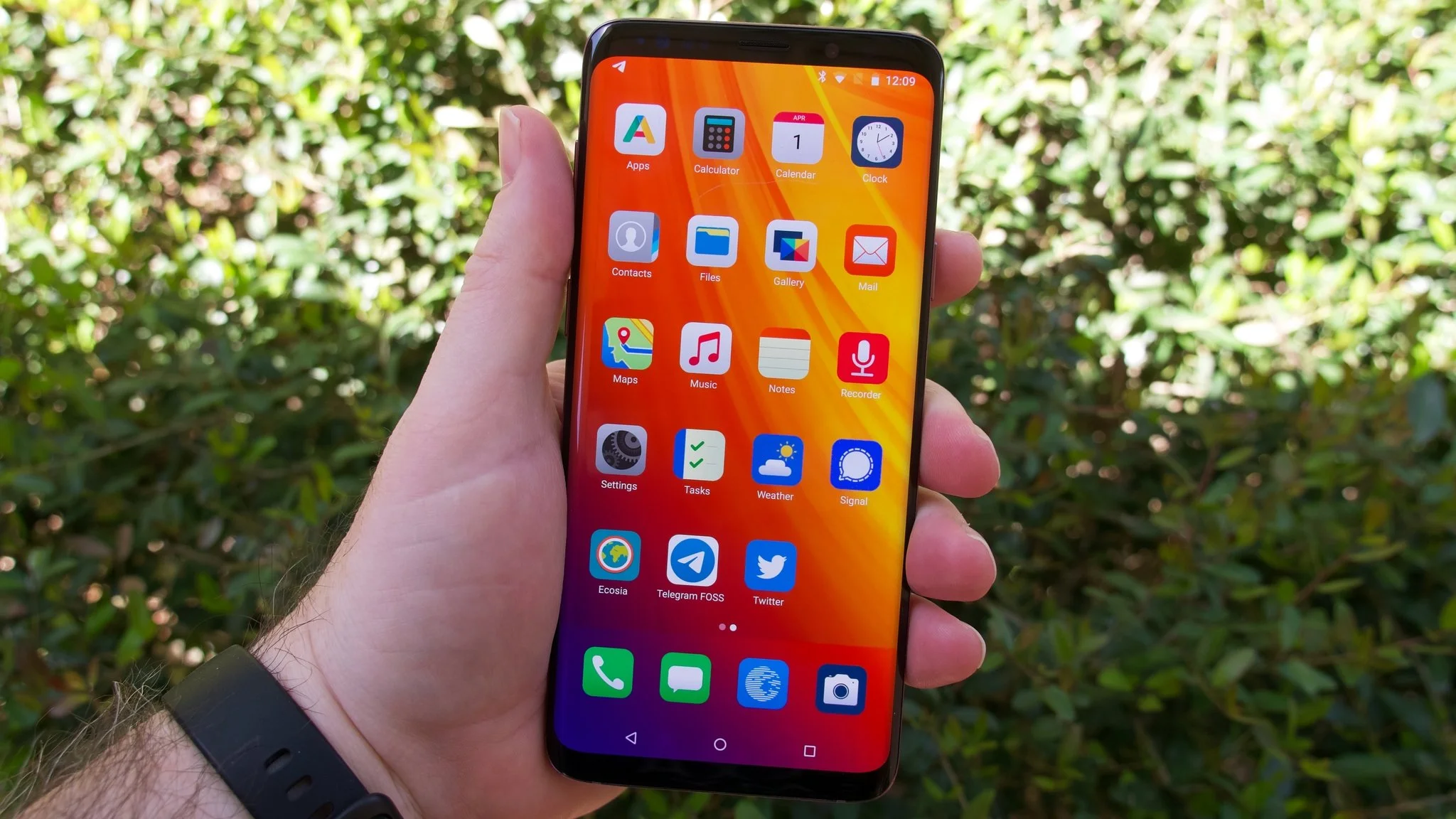
/e/OS is a new and rising independently created operating system. It reflects a growing global desire for alternatives to products from big tech. Created by Gaël Duval, /e/OS is designed as a privacy-respecting mobile OS that removes integration with Google services while maintaining Android compatibility. With more than 750,000 users across Europe, the United States, and Asia, it demonstrates that a growing number of people are actively seeking greater digital freedom. Rather than rejecting smartphones altogether, these users are choosing an independent solution that aligns with their values.
The success of /e/OS highlights a broader shift in public thought. Concerns about data harvesting, platform dependency, and centralized control have become mainstream. By offering a practical, consumer-ready alternative, /e/OS shows that competing with major competitors is difficult but not impossible. It uses the current framework of society, while redistributing power.
In some respects, by way of being independently created, /e/OS echoes a past creation known at TempleOS. However, in contrast, TempleOS represents a radically different kind of operating system. Developed entirely by Terry A. Davis over roughly a decade, TempleOS was a 64-bit system written from scratch, complete with its own programming language, compiler, and graphics system. Davis described the project in spiritual terms, envisioning it as the “Third Temple.” The operating system ran in a deliberately simple 640x480 environment with a limited color palette, reflecting a highly specific design philosophy.
TempleOS was never intended for mass adoption. It was not a commercial product, nor was it optimized for modern hardware ecosystems. Instead, it stands as a singular artistic and technical expression. Many observers compare it to Outsider Art because it emerged outside conventional institutions and followed an intensely personal vision. Davis was suffering from manic episodes and believed that god had commanded or influenced him to create the OS. However, it should be noted that this was quite an achievement, as this has been compared to someone building a skyscraper over the course of 10 years, all alone.
When comparing /e/OS and TempleOS, the contrast is striking. One is collaborative, market-aware, and focused on user privacy within contemporary infrastructure. The other was solitary, visionary, and unconcerned with market viability. Yet both demonstrate that individuals can initiate ambitious projects that challenge dominant systems. Duval sparked a movement that now serves hundreds of thousands. Davis constructed an entire operating system alone.
TempleOS, in particular, shows that a single determined person can create something astonishingly complex without corporate backing or institutional support. Davis completed his work without the assistance of modern AI tools, writing every component manually. His achievement underscores the raw potential of focused human effort.
However, creating something meaningful does not require building an operating system from scratch. Success can come from solving a small but real problem, designing a useful tool, or making something simple that’s interesting. Complexity is not the sole measure of value. Today, creators also have access to AI systems that can assist with coding, research, prototyping, and design. Tasks that once required years to complete can now be accelerated dramatically.
The broader lesson from both /e/OS and TempleOS is about agency. Individuals still possess extraordinary creative leverage, whether working alone or organizing teams. Technology may evolve, and AI may lower barriers, but vision and persistence remain central. Creating something amazing has always been within reach of determined individuals. In the current era, with AI available at the user level, that reach may be closer than ever.

Lisa Lang
CyborgNews